

Two Nigerian women entrepreneurs are leading a quiet revolution against one of the country’s most pressing but overlooked crises food waste. Through innovation and technology, they are helping farmers and households cut losses from the estimated ₦3.5 trillion worth of food wasted annually, transforming what was once discarded into value and sustainability.
At the center of this movement are Chiamaka Eze and Fatima Yusuf, co-founders of EcoFresh Solutions, an agritech startup dedicated to tackling post-harvest losses across Nigeria’s agricultural value chain. Their company develops solar-powered cold storage systems and smart preservation technologies that help farmers store perishable produce for longer periods without relying on costly or unreliable electricity.
Speaking during a recent innovation summit in Lagos, Eze said the idea was born out of personal frustration with seeing farmers lose up to half of their harvests to spoilage before reaching the market.
“We realized that Nigeria doesn’t have a food production problem it has a preservation and distribution problem,” she explained. “Our mission is to ensure that what farmers grow actually feeds people instead of rotting away.”
EcoFresh’s solar hubs have already been deployed in parts of Kaduna, Ogun, and Benue States, cutting post-harvest losses by nearly 40 percent in participating communities.
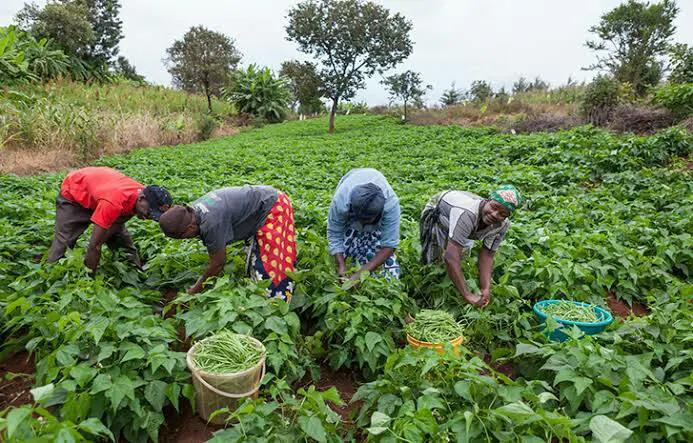
Fatima Yusuf added that the innovation is also empowering women farmers, who make up a large portion of Nigeria’s agricultural workforce. “We’re training rural women to manage the cold hubs as micro-entrepreneurs,” she said. “They earn income while saving their communities from hunger.”
According to the Food and Agriculture Organization (FAO), Nigeria loses about 45 percent of its fruits and vegetables post-harvest losses that, if curbed, could feed millions.
Experts say innovations like EcoFresh’s could play a key role in achieving food security, cutting greenhouse gas emissions, and supporting the government’s push for agro-industrial growth.
As Nigeria grapples with rising food prices and insecurity, the work of innovators like Eze and Yusuf offers a glimpse of what’s possible when women lead with vision, technology, and purpose.










Leave a Reply