
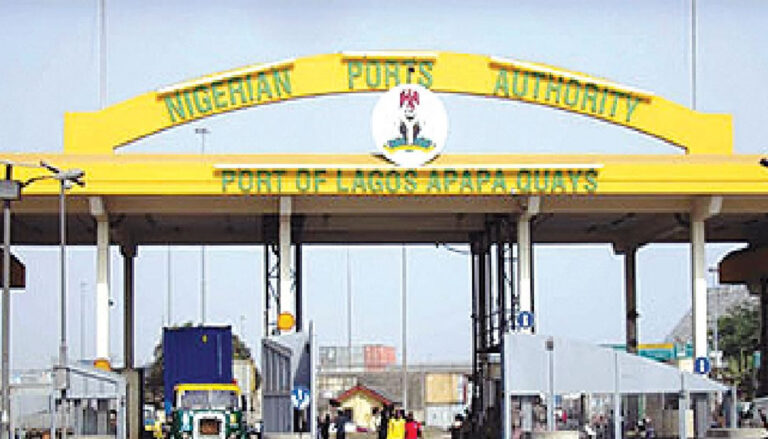
Nigeria’s merchandise trade rose to N41.4tn in the second quarter of 2026, highlighting the growing importance of the maritime sector to the country’s economy.
The Nigerian Ports Authority (NPA) also recorded a 24.8 per cent increase in cargo throughput in 2025, as the agency called for more accurate and evidence-based reporting of developments in the maritime industry.
The NPA’s General Manager, Corporate Affairs Division, Ikechukwu Onyemekara, disclosed the figures on Wednesday in Lagos during a two-day Data-Driven Business and Maritime Reporting Training organised by the authority in partnership with the Premium Times Training Academy.
According to him, cargo throughput across Nigerian ports increased from 103.6 million metric tonnes in 2024 to 129.3 million metric tonnes in 2025, reflecting growing cargo volumes and expanding port operations.
He added that the positive trend continued in the first half of 2026, with cargo throughput rising by 12.2 per cent to 68.2 million metric tonnes, compared with 60.8 million metric tonnes recorded during the corresponding period of 2025.
Onyemekara said accurate reporting of maritime activities was essential because developments in the sector had direct implications for trade, investment decisions and the wider economy.
“Nigeria’s merchandise trade value hit N41.4tn in the second quarter of 2026, representing a 5.6 per cent increase over the corresponding period of 2025, demonstrating the scale of economic activity linked to the movement of cargo through the country’s ports,” he stated.
He explained that the efficiency of port operations affected manufacturers, exporters, importers, consumers and investors, noting that delays and operational bottlenecks increased business costs and eventually translated into higher prices for goods.
The NPA spokesperson further disclosed that Nigerian ports received 2,300 vessels in the first half of 2026, compared with 2,152 ships during the same period in 2025.
He also revealed that outward cargo accounted for 41.9 per cent of total throughput in the second quarter, indicating an improvement in export activities.
Lekki Port accounts for nearly 40% of cargo throughput
Onyemekara urged maritime journalists to look beyond headline figures and examine the factors responsible for changes in cargo volumes and port activities.
He cited Lekki Deep Sea Port, which handled nearly 40 per cent of total cargo throughput across Nigerian ports in the first half of 2026.
According to him, more than three-quarters of the port’s cargo traffic was linked to refinery operations, highlighting how major industrial investments were influencing port activities and trade patterns.
He said understanding such details was important for journalists seeking to provide meaningful analysis of developments in the maritime sector.
NPA outlines port modernisation plans
On the authority’s ongoing reforms, Onyemekara said the NPA was pursuing port modernisation, digitalisation, export facilitation and sustainability initiatives to improve operational efficiency and strengthen Nigeria’s competitiveness.
He disclosed that the Federal Government had secured £746m in UK-backed financing to modernise the Apapa and Tin Can Island ports.
He added that rehabilitation works were also ongoing at the Onne, Warri and Calabar ports.
The NPA spokesperson identified the National Single Window, Port Community System and Eto electronic truck call-up platform as major initiatives expected to simplify documentation, reduce delays and improve cargo movement across the country’s ports.
He also urged journalists covering the maritime industry to verify information, consult primary sources, compare figures across corresponding periods and give relevant institutions the opportunity to respond before publishing reports.
Emphasising the importance of balanced journalism, Onyemekara said the authority was not seeking favourable coverage but accurate reporting of its activities and performance.
“We do not ask you for praise; we ask for accuracy. Where we fall short, report it.
“Where we make progress, report that too, with the same discipline,” he said.









Leave a Reply