
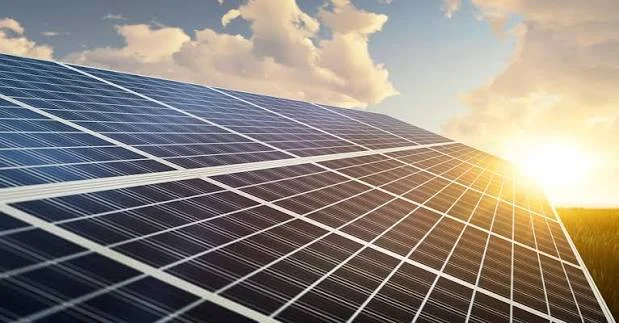
Experts at the COP31 climate conference in Türkiye say Nigeria has a chance to become a major solar manufacturing and distribution hub for West Africa. They point to three things: a big electricity access gap in the region, plenty of minerals, and growing demand for alternative power, which together they say add up to investment worth billions of dollars. Their message was that Nigeria should stop only importing solar panels and other clean energy technology and start making them, along with processing minerals, building batteries and assembling equipment for the home and regional markets.
They spoke at the Nigerian Pavilion on the sidelines of the 31st UN Climate Change Conference, in a session titled “Just Transition: Unlocking Nigeria’s Solar Opportunities.” It was part of Tuesday’s thematic day on Ocean, Seas, Nature and Land Use. The experts also named solar-powered farming, irrigation, cold storage and agro-processing as emerging opportunities, and they called for affordable financing, stronger product standards and technical skills training so the energy transition doesn’t leave people behind.
Michael David, Executive Director of the Global Initiative for Food Security and Ecosystem Preservation, argued that Nigeria has the minerals and the market to build a competitive solar industry but loses out by relying on imports. He listed 12 minerals that could feed different stages of panel and battery production: silica, lithium, copper, aluminium, iron ore, graphite, manganese, nickel, cobalt, tin, zinc and silver. These are found in states including Nasarawa, Kogi, Kwara, Niger, Zamfara, Plateau, Bauchi, Ondo and Osun. “Solar energy is not just an opportunity. It is industrialisation. It is investment. It is an economic transformation opportunity for Nigeria,” he said. “It includes local manufacturing, minerals processing, battery storage, job creation, agricultural productivity and even regional exports. And so Nigeria must move from just importing solar panels to producing, manufacturing, assembling and exporting clean energy technologies.”
He said Nigeria imported about 2.9 million solar panels last year, spending more than N450bn, even though it has some of the raw materials to make them. Building local capacity, he argued, would cut import dependence, create jobs and give Nigeria a bigger share of the regional market. On the size of that market, he said West Africa accounted for about 33 per cent of the 565 million people in sub-Saharan Africa without electricity in 2023, roughly 185 million people. “Let’s look at the entire West Africa as the big market size for the solar market… That is a huge market,” he said. He added that the International Finance Corporation has identified about $8.5bn in commercially viable solar investment opportunities in Nigeria by 2030, and that broader distributed renewable energy opportunities could exceed $18bn over the next decade.
Olamide Fagbuji, the Senior Special Assistant to the President on Climate Technologies, spoke for the government. He said Nigeria is working on policies that make it easier for private investors to put money into renewables. He highlighted the Electricity Act, which lets states take part in generating and distributing power, as important for decentralized supply. He also cited Nigeria’s Nationally Determined Contribution 3.0, which sets renewable targets including raising the share of renewables in the energy mix by nine per cent a year toward 50 per cent by 2030. Reaching those targets, he stressed, will need substantial financing and stronger cooperation between government and private investors.
Gloria Bulus, Executive Director of Bridge That Gap Initiative, brought the discussion back to households. The biggest obstacle for low-income families and underserved communities is affordability, she said. Ordinary electricity bills can be paid gradually, but solar usually needs a large upfront payment for panels, batteries and other parts. “For communities, it is not about the accessibility of solar panels. It is not about the solar itself. It is about the affordability of those panels and even the battery,” she said.
The panel’s argument, then, has two halves that haven’t met yet: a big industrial opportunity on one side, and on the other a cost barrier that keeps ordinary people from using the product.













Leave a Reply