
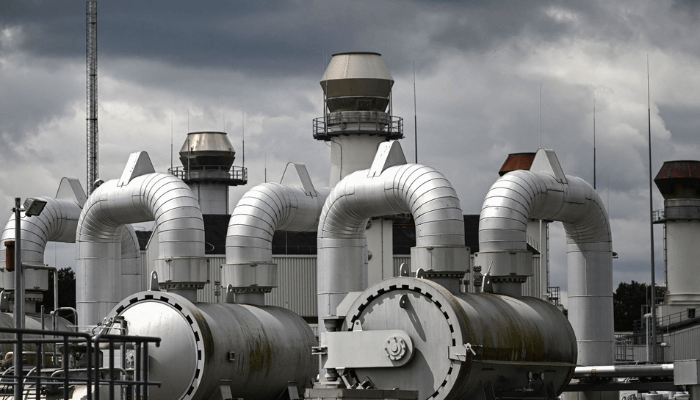
Nigeria’s much-celebrated “Decade of Gas” initiative, launched to transform the country into a gas-powered economy by 2030, is facing significant implementation setbacks. Despite strong policy rhetoric and global energy partnerships, the project remains hampered by infrastructure deficits, regulatory uncertainty, and funding constraints three key hurdles threatening its success.
The Decade of Gas was unveiled in 2021 by the Federal Government under the administration of former President Muhammadu Buhari, positioning natural gas as the nation’s transition fuel for industrial growth, job creation, and energy diversification. However, nearly four years into the plan, progress has been slower than anticipated.
1. Infrastructure Gaps
Nigeria’s inadequate gas infrastructure including limited processing plants, aging pipelines, and poor distribution networks remains a primary barrier. Industry experts say the absence of an extensive gas transportation system has stifled domestic supply and discouraged investment.
“We cannot industrialize on promises alone,” said an oil and gas analyst, Dr. Bala Yusuf. “Without pipelines connecting production fields to consumption centers, the Decade of Gas will remain largely aspirational.”
The much-anticipated Ajaokuta–Kaduna–Kano (AKK) gas pipeline project, designed to improve domestic gas utilization, has also suffered repeated delays due to funding shortfalls and logistical bottlenecks.
2. Regulatory and Policy Uncertainty
Although the Petroleum Industry Act (PIA) was passed in 2021 to provide clarity for investors, inconsistencies in policy interpretation and regulatory enforcement have slowed sector confidence. Several international oil companies (IOCs) have diverted investments to other African markets with more predictable fiscal regimes.
Analysts warn that without transparent governance and stable pricing frameworks, Nigeria risks missing the window to leverage global demand for cleaner fuels.
3. Financing and Investment Shortfalls
Access to financing remains a critical challenge. With global banks tightening restrictions on fossil fuel projects and domestic investors wary of policy risks, many gas projects remain underfunded.
While the Nigerian National Petroleum Company Limited (NNPCL) has sought private partnerships to drive gas monetization, experts argue that the absence of clear fiscal incentives has discouraged large-scale private sector participation.
The Road Ahead
The Federal Government insists that the Decade of Gas remains on track, with renewed efforts to attract private capital and expand local infrastructure. However, stakeholders warn that unless these systemic challenges are urgently addressed, Nigeria’s dream of becoming a regional gas powerhouse may remain elusive.
“Nigeria has the resources what it needs now is execution, accountability, and sustained policy direction,” said Dr. Yusuf.
As global energy markets shift toward decarbonization, Nigeria’s ability to overcome these hurdles could determine whether the “Decade of Gas” becomes a milestone achievement or another unfulfilled promise.








Leave a Reply